
Does multilingualism slow aging?
Dressing a weak analysis in a fancy title and figures

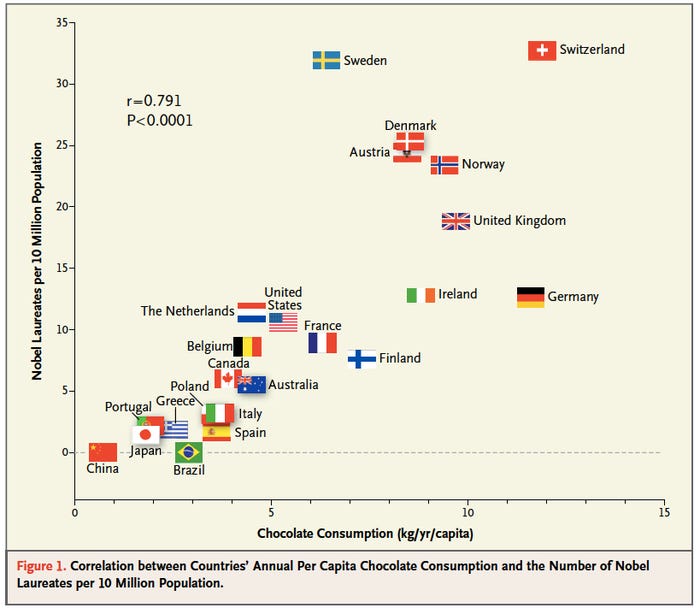
A few weeks ago, a paper linking multilingualism with aging went viral across Twitter, LinkedIn, and major media. This isn’t uncommon. Biomedical literature gets hyped by influencers and media all the time, especially when it touches a behavior people intuitively think must be beneficial. But the results of this paper made the cover in a major scientific journal and were promoted as a breakthrough by respected science communication accounts.
I read the paper out of personal interest, not with a reviewer mindset. If anything, I was biased in favor of the study conclusion. The idea that multilingualism might slow cognitive aging is appealing and intuitively reasonable.
However, I was honestly surprised to encounter a very weak analysis.
The study
The authors analyzed 86,149 participants from SHARE (Survey of Health, Ageing and Retirement in Europe), a nationally representative cohort of adults aged 50+ across 27 European countries. Data collection began in 2004 and happens in waves every ~2 years. SHARE includes health, socioeconomic, and social-network variables collected through questionnaires.
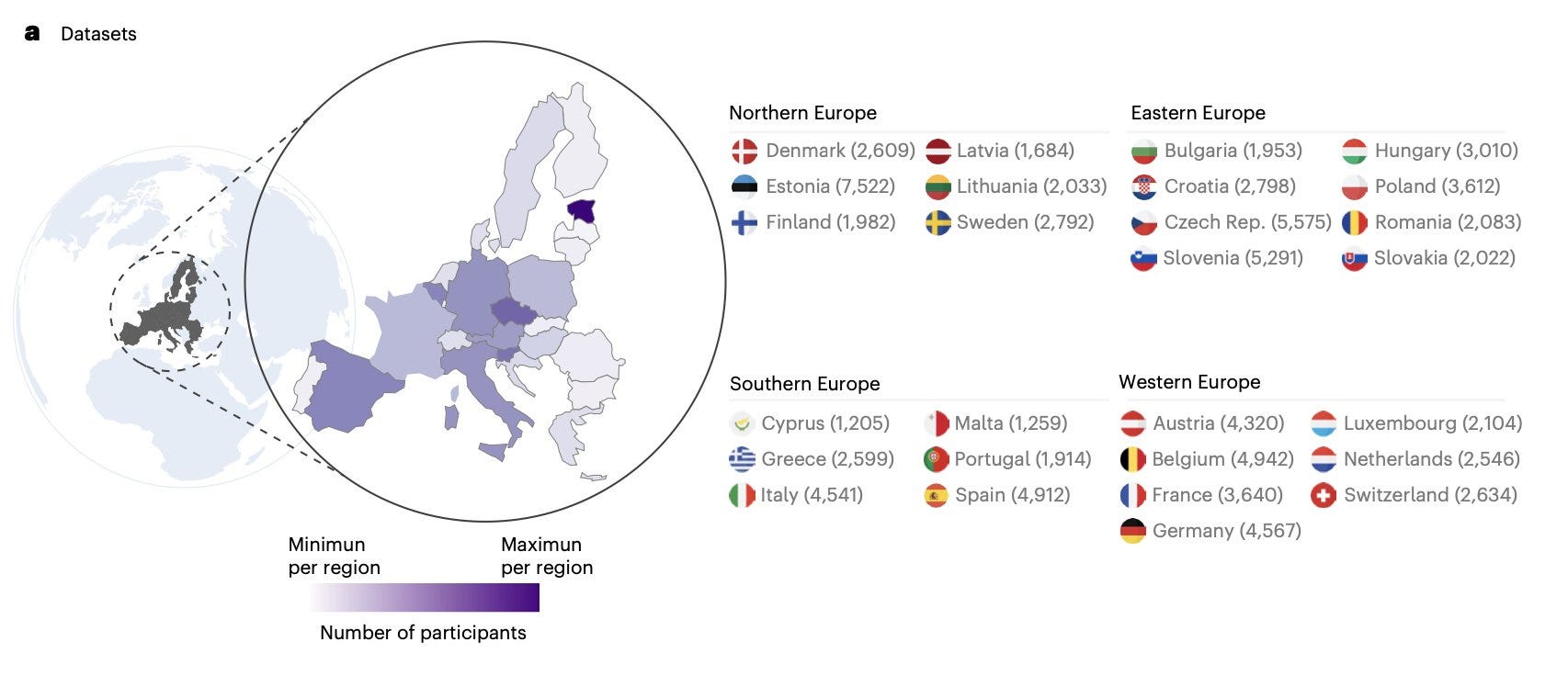
Despite the multi-panel figures and complicated terminology, the analysis is, in principle, very straightforward. The authors look for an association between two variables:
Multilingualism status, and
A measure of aging they call the “biobehavioral age gap” (BAG)
using both cross-sectional and longitudinal analyses.
Let’s break down these two key variables.
The outcome: biobehavioral age gap
The name sounds sophisticated. Following the logic of aging clocks, the authors train a gradient boost model to predict chronological age. They use tabular variables for cognition (MMSE), functional ability (Barthel), quality of life, education level, history of hypertension, diabetes, heart disease, visual or hearing impairment, obesity, alcohol consumption, and sleep problems. Most of these variables were self-reported.
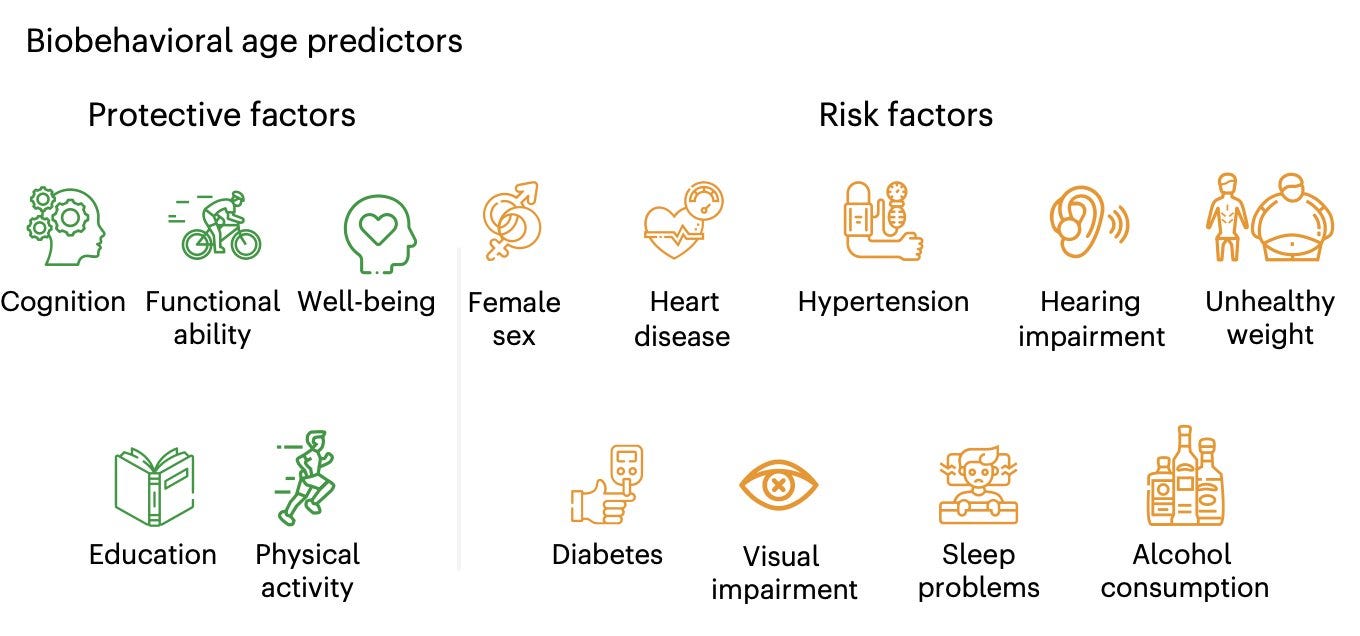
How well did this model predict age? The model trained on 90% of the dataset achieved an R2 of 0.24 with a mean absolute error of 7 years. I believe that most would agree that this is a very weak prediction, which is to be expected, given that the included variables are low-dimensional and not really specific biomarkers of aging. Among the included variables, the top contributor was functional status (kind of expected).
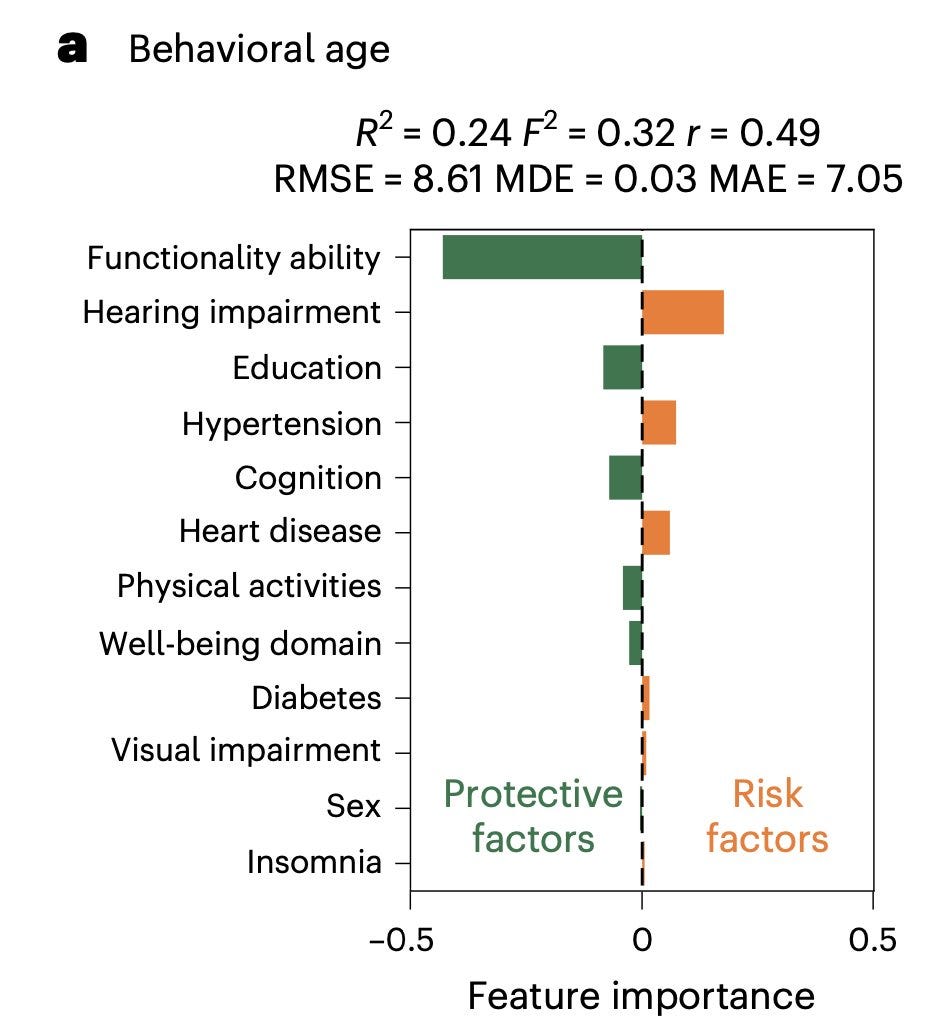
It’s important to note that many of these variables are proxies of socioeconomic status, raising questions if they should be included in the model. E.g. how is education level a marker of biological aging? It’s determined much earlier in life. Education is naturally associated with younger chronological age. But that has nothing to do with aging. It simply reflects the fact that Europeans (like most populations globally) have attained higher education levels in more recent decades. So, if we correlate education level with chronological age, we are going to get a negative correlation, reflecting that older people were at a population level less likely to have attended higher education. It is therefore not unsurprising that in the model the authors used to predict age, education was the top “protective” contributor being associated with younger age after functional status . Of course, this has nothing to do with biological aging — it’s simply a demographic artifact.
The authors compute “biobehavioral age gap” by subtracting model predictions from chronological age, then binarize it into >0 vs. <0 (people predicted to be “older” or “younger” than their actual age based on the abovementioned variables). As higher education is the second-strongest predictor in a “protective” direction, individuals with higher education will inevitably be overrepresented in the so-called “slow aging” group.
Beyond education, other variables are also indirect proxies of socioeconomic status, e.g. MMSE, used as a metric of cognition, is notoriously influenced by education level and socioeconomic conditions. Physical activity, too. The key point is that the main outcome is inherently correlated with socioeconomic status due to reasons that have nothing to do with biological aging. Of course, a robust analytical design could still convince us that, even with this “leak” in the outcome variable, the findings remain meaningful. So let’s take a closer look at the exposure.
The exposure: country-level multilingualism
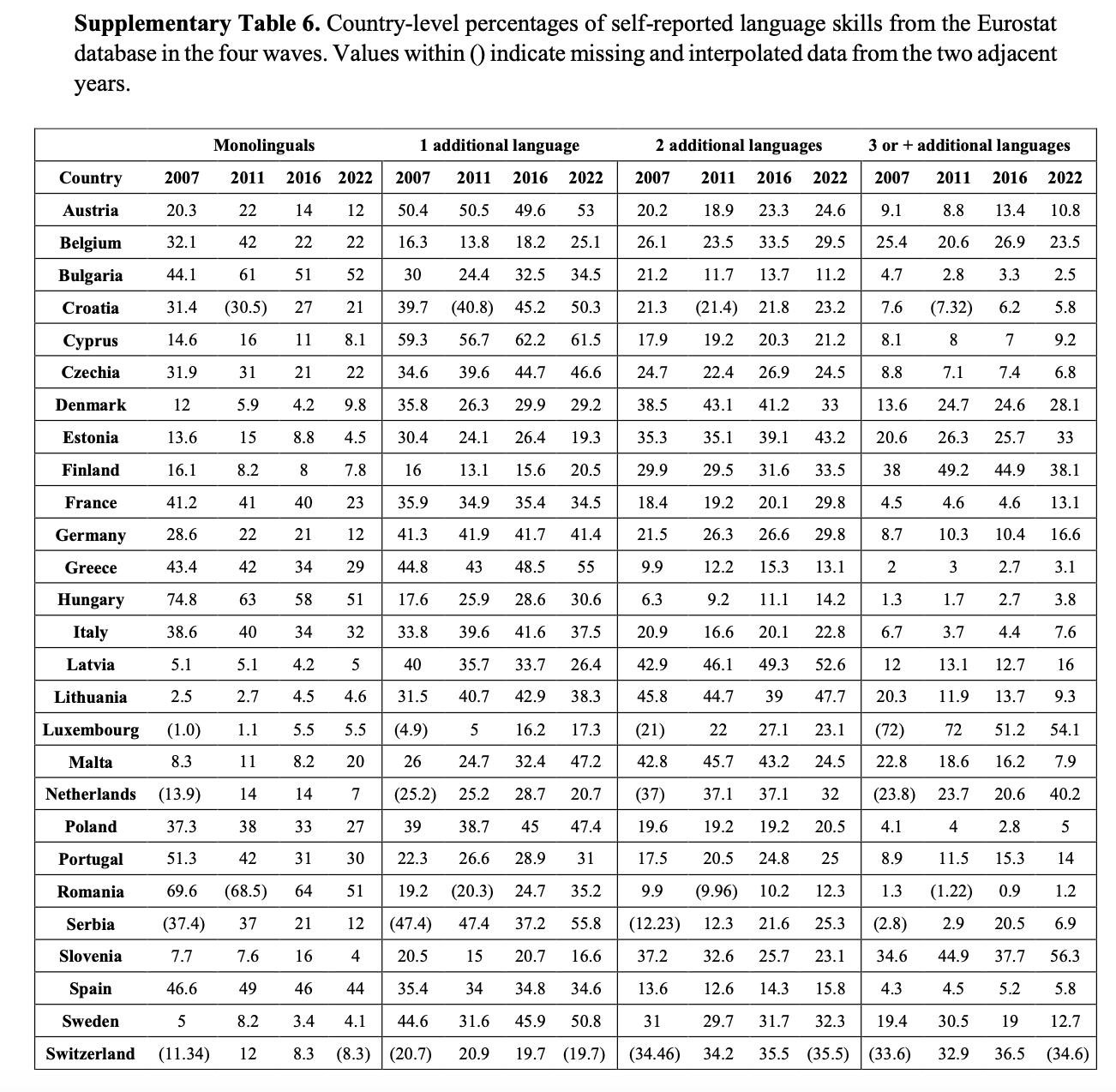
The study assessed multilingualism at a country level using Eurostat statistics.
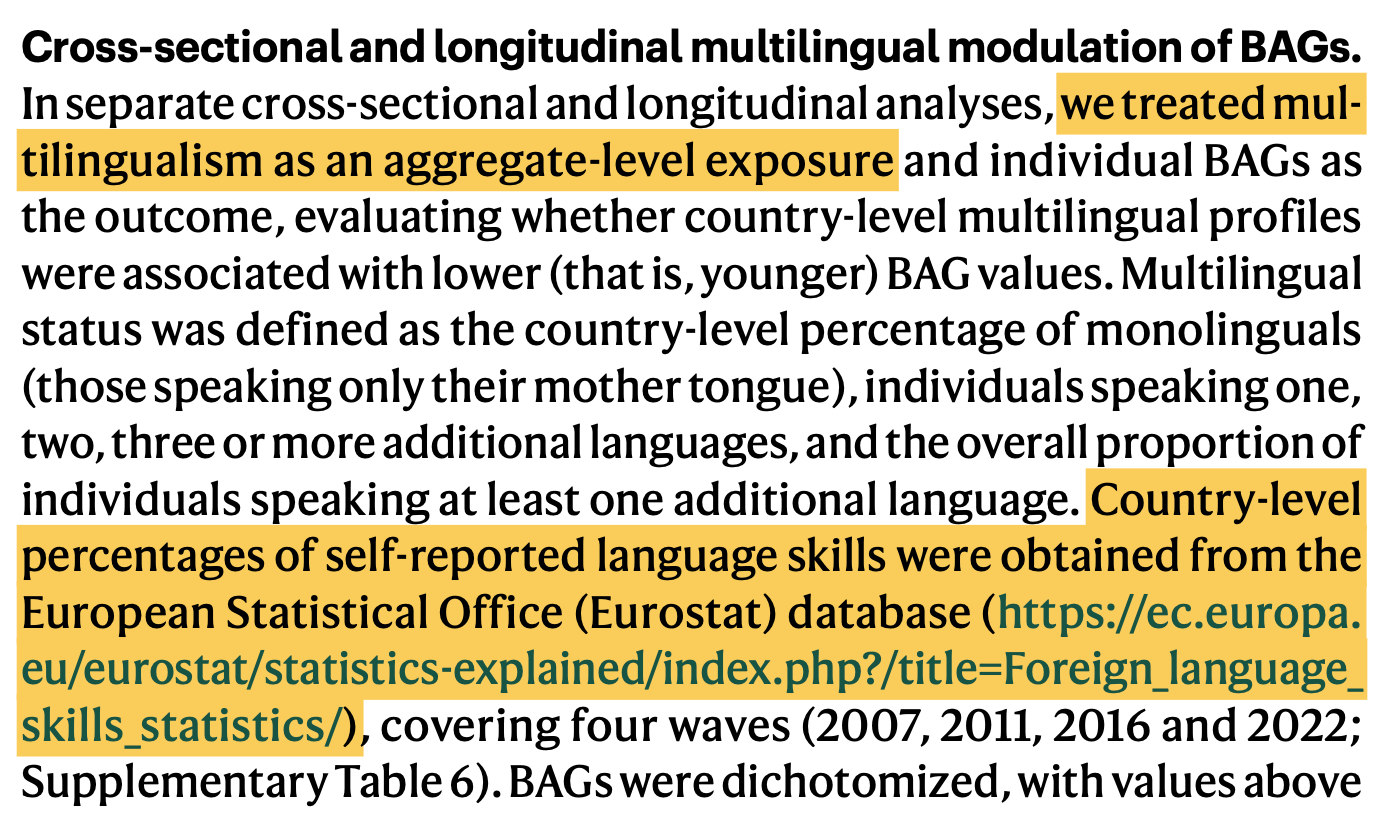
Wait, what? Yes, the authors attributed to every participant a value for multilingualism that was the same for every person living in a country. Every person living in Germany receives the same value regardless of whether they speak one language or five. Every person living in Greece receives the same value regardless of whether they speak one language or five. A highly educated polyglot in Munich and a monolingual retiree in rural Bavaria both get Germany’s country-average multilingualism score.
Results and confounding
If this sounds bizarre, it is. In essence, this wipes out entirely within-country variance. Therefore, the results of all analyses can only be interpreted at the country level, not the individual level.
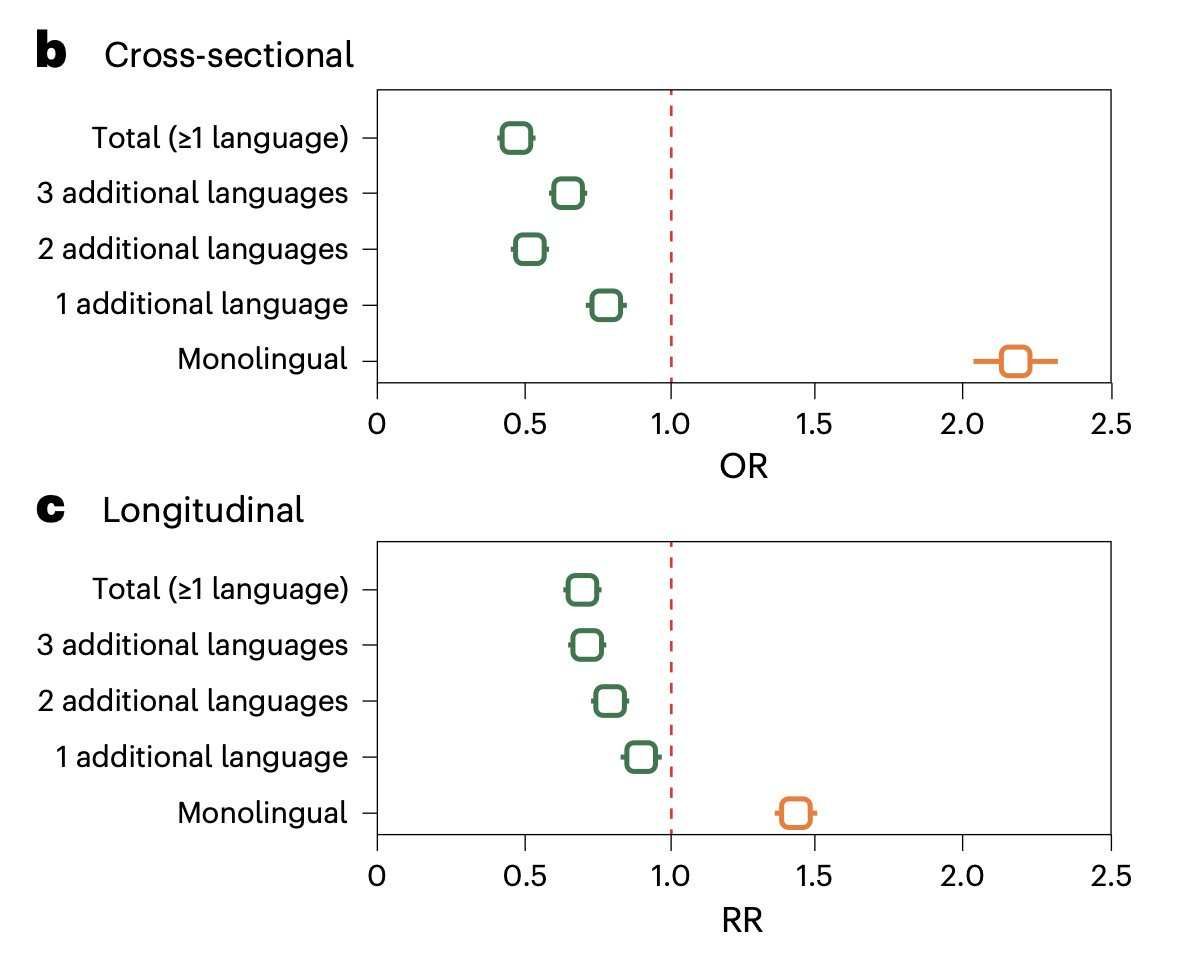
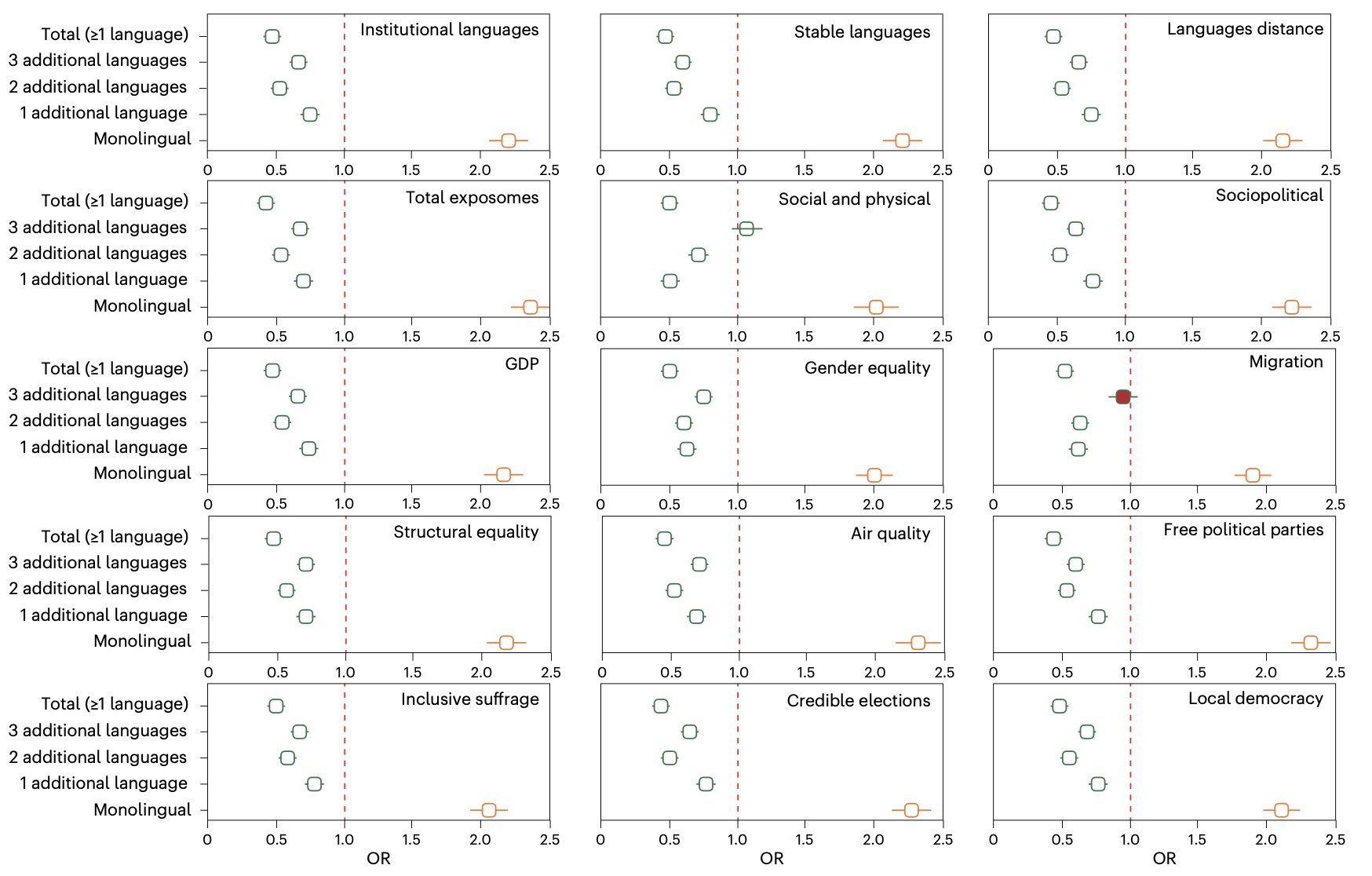
So, when the authors write that “monolinguals were 2.11× more likely to experience accelerated aging,” the correct interpretation would be: “the within-country percentage of monolingualism was associated with X-times more accelerated aging.”
In other words, what the study found is that there is a correlation between multilingualism and their aging measure across countries. This supports only an ecological association, not an effect at an individual level as claimed by the authors.
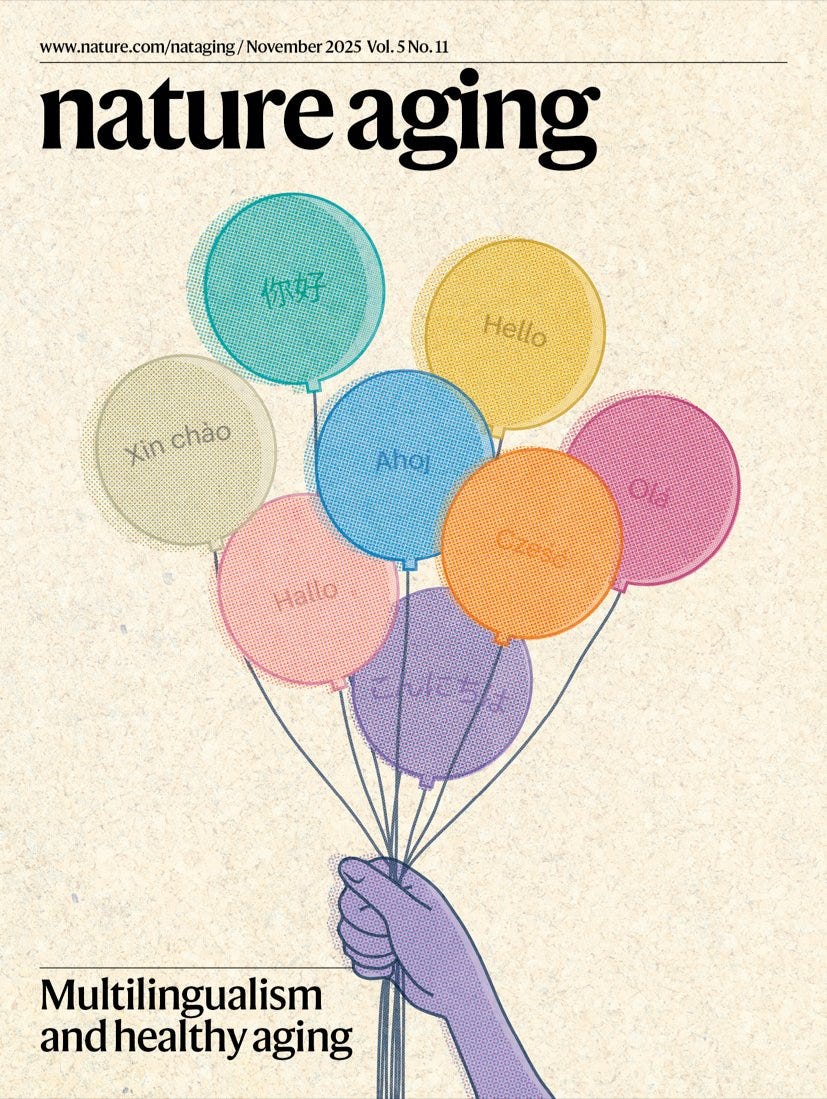
Honestly, this reminds me of this graph correlating average chocolate consumption with number of Nobel laureates per population across countries.
Ecological associations are notoriously prone to confounding, as they bundle together multiple correlated potential confounding factors: average education, income distribution, healthcare quality, demographic composition, migration history, and so on. A typical confounding factor can influence both the exposure and the outcome. But in an ecological study, the results could be confounded by any parameter that influences not a person’s chance of being a multilingual and having a lower biobehavioral age gap — but a country’s level of multilingualism and the country-average biobehavioral age gap.
As shown above, we already known that biobheavioral age gap is at least heavily influenced by education. So, countries with a higher educational level will score on average lower in biobehavioral age gap and will have a higher proportion of individuals classified as of “slow biobehavioral aging”. Guess which is a strong predictor of country-level multilingualism. You found it: education level.
The authors adjusted for a lot of different socioeconomic variables to overcome this issue. But of course, when the analysis is done at a country level, such analyses neglect individual variation and are not nuanced enough no matter what you adjust for.
Conclusion
So, my most moderate conclusion is that countries with higher level of multilingualism tend to score lower on a weak education-biased aging metric. Despite the hype, this is, at best, a very weak analysis that contributes only little to the relevant question of whether multilingualism is associated with slower cognitive decline.
It is bizarre - most of the paper actually reads fairly carefully. The title, abstract, and the media gallop took it precisely in the wrong direction that is forcing people to clarify what it actually does or does not mean. Thank you for your clear write-up.